Chamoy Recipe
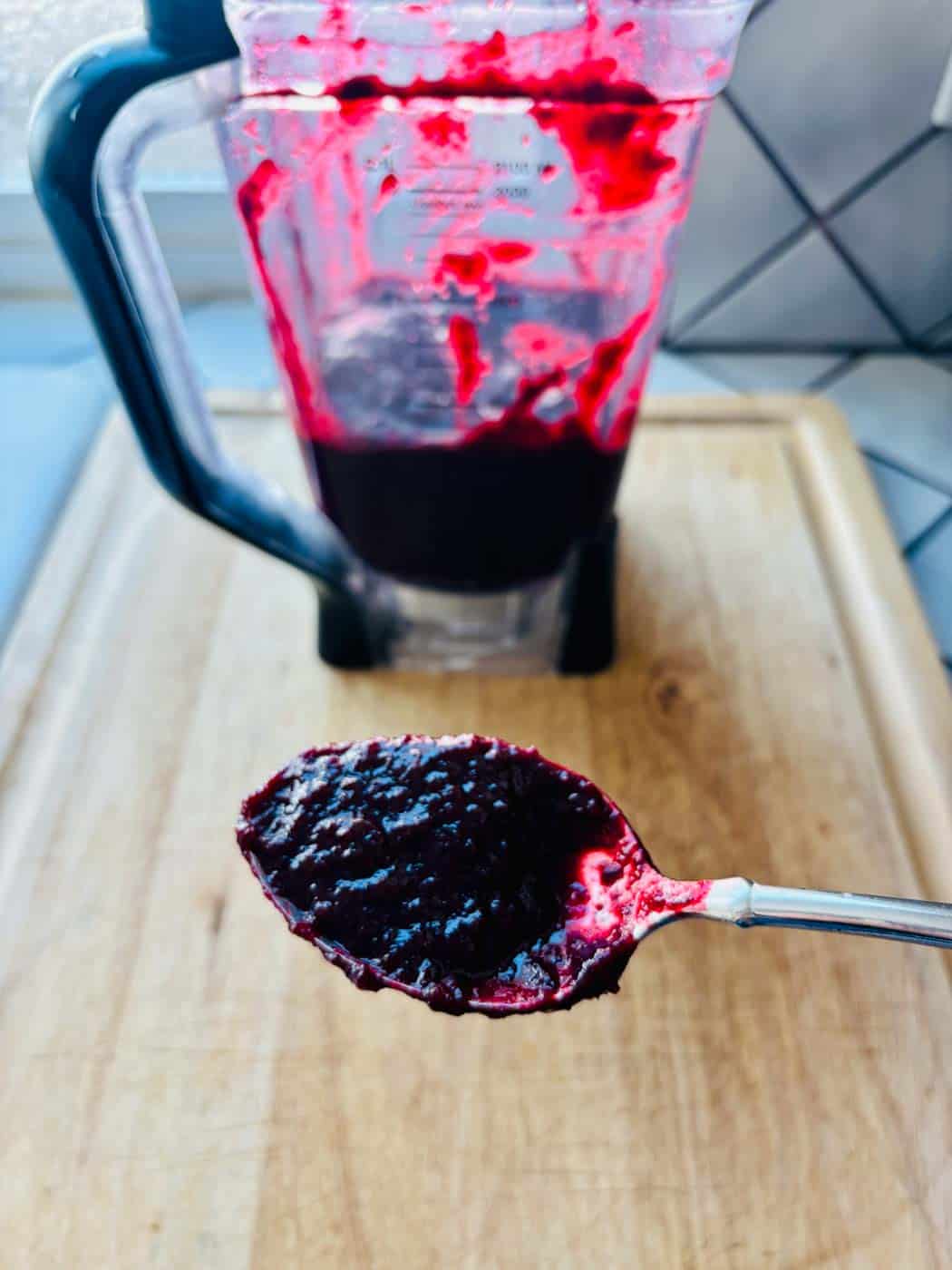
Tart, tangy, sweet, and spicy! This Chamoy recipe is for a multipurpose condiment from Mexico that has ties to Southeast Asia. Drizzle it over fruits, vegetables, and snacks. Use it to glaze meat, poultry, and fish. It’s also delish in frozen treats and cocktails.
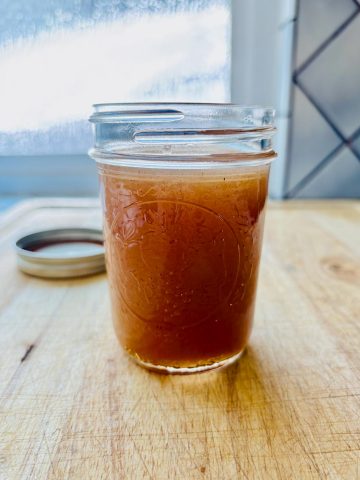
Chamoy is a condiment that is very popular in Mexico. Made from brined fruit and chiles, it is spicy, sweet, sour, and salty. Doesn't the sound of that just make your mouth water? The texture ranges from liquid-y to paste-like.
Use the tangy sauce in both sweet and savory dishes. One of the most popular uses of chamoy is to drizzle it on fresh ripe mango, pineapple, and watermelon. It is equally delicious when added to sauces for meat and poultry dishes, as a glaze for mixed nuts, and swirled into frozen treats, like my Mango Sorbet with Chamoy Ripple.


Chamoy has murky origins, but there is a definite tie to Southeast Asia (notice the karate kid on the chamoy label, a few photos down). The first time I tasted chamoy, it reminded me of something I grew up eating: li hing mui, or dried salted plums. I like to think of these plums as the OG sweet and sour treat, way better than Sour Patch Kids candy.
Living in Hawaii as a kid, one of my favorite after-school snacks was li hing mui. There used to be a store, Crack Seed Center, at the Ala Moana Mall. It sold li hing mui, along with a huge assortment of other preserved dried fruits, all displayed in big glass jars. Things like rock salt plum, dried lemon peel, and li hing mango. A visit to the crack seed store was always exciting and delicious!
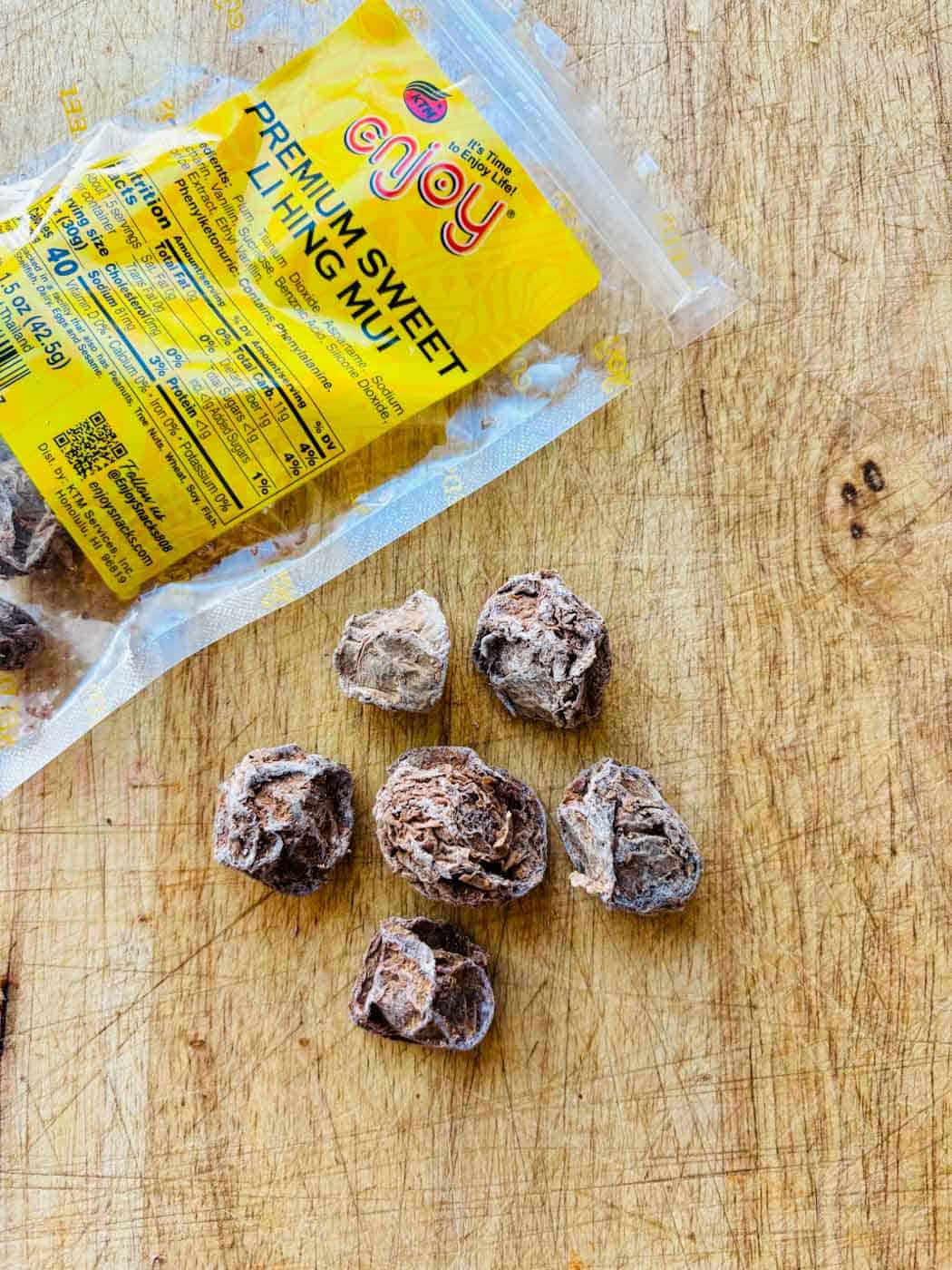
On our most recent trip to Hawaii, I found the local grocery store in Kona had a crack seed section. So, of course, I had to get a package of li hing mui! The ingredient list was not as I remembered. Aspartame and sodium saccharin are now included, so I’m not sure if I want to even finish the package, but I couldn’t help buying it.
So, how does this relate to chamoy? A popular theory is that Asian immigrants to Mexico brought li hing mui and other dried salted fruits to their new home. These tangy treats were adopted and adapted, becoming part of the Mexican concoction called chamoy.
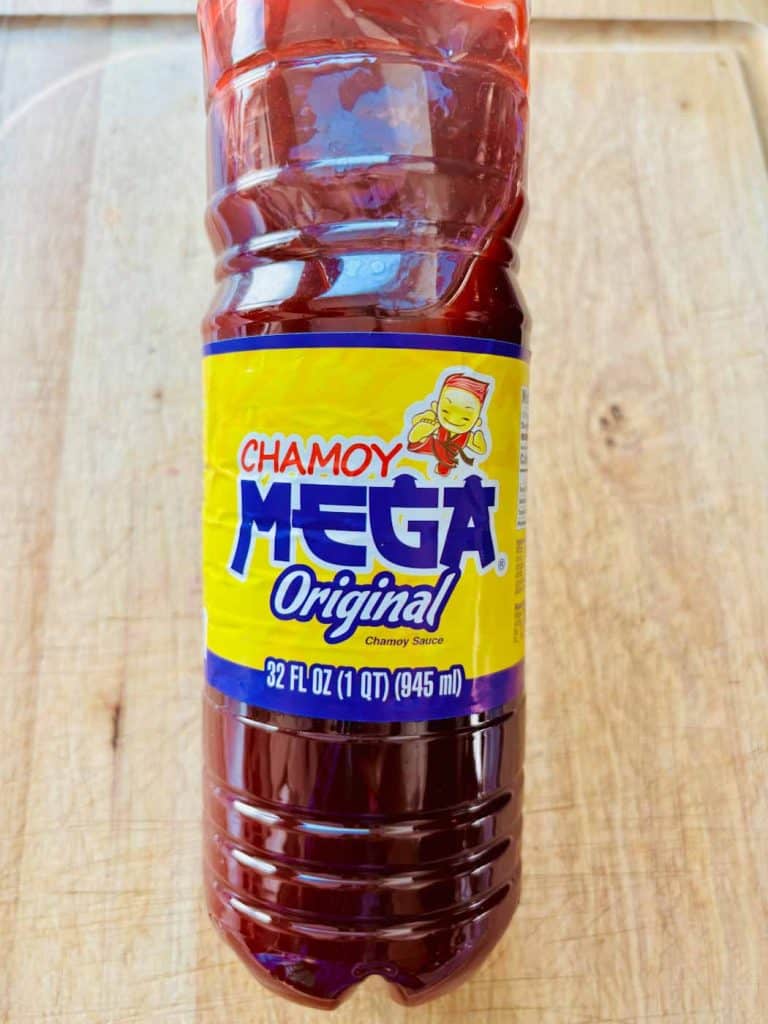
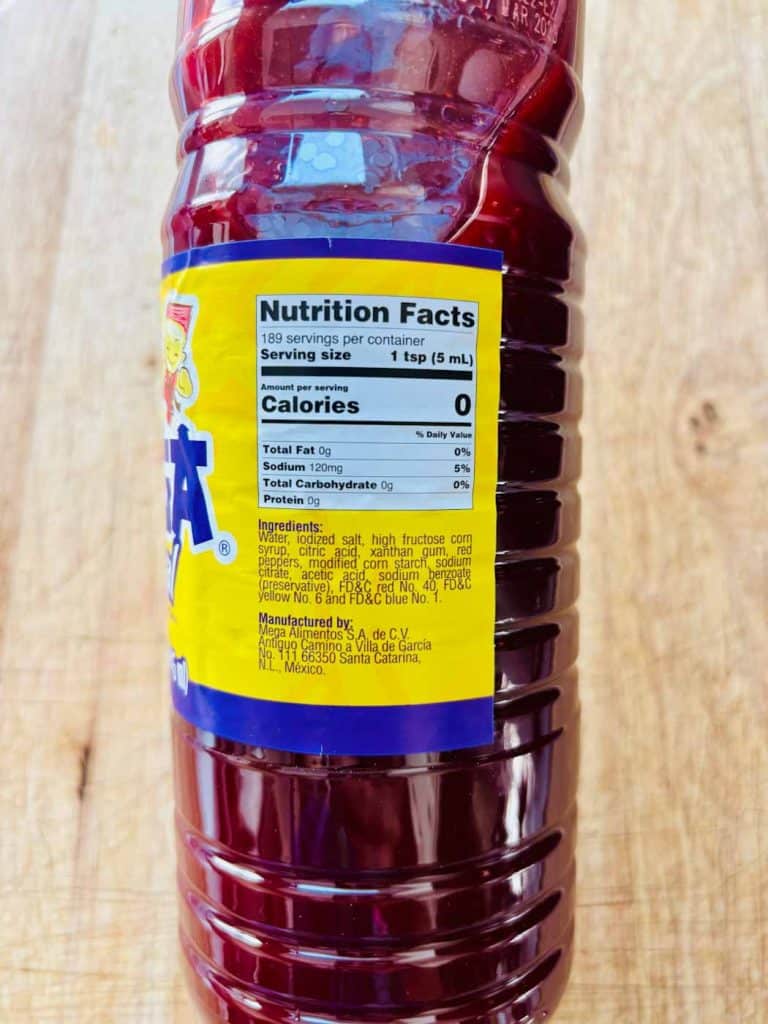
It seems store-bought chamoy, however, has gone a little rogue and scary, as you can see on the ingredient label. It now includes high-fructose corn syrup, several artificial food dyes, and other things I don’t know how to pronounce. As much as I love the taste, I wanted to find a better way to enjoy it.
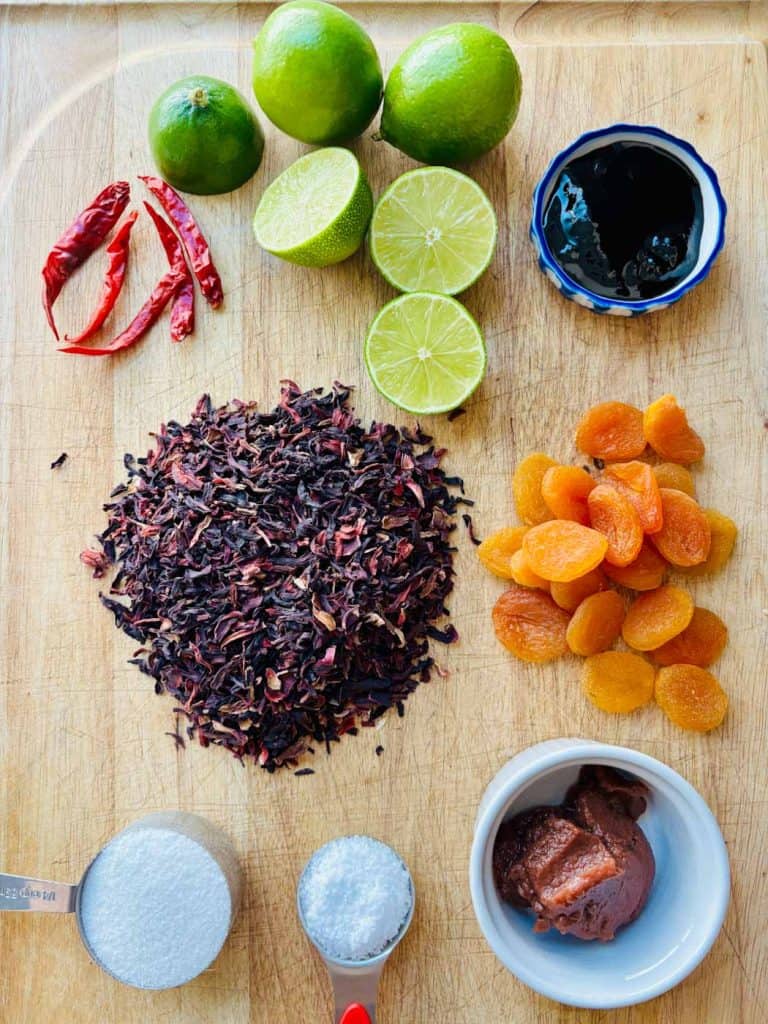
There are a few homemade chamoy recipes online, but when I saw the one posted by Serious Eats, I knew it would be a winner. It included pickled plums. Going off their recipe, I made a few small changes and found the result to be a tantalizing and tangy chamoy to use in so many things!
Lessons Learned
- If you can’t find dried arbol chiles, sub in another fiery chile like Thai bird chiles or cayenne pepper.
- A surprising sub for umeboshi plums or plum paste? Rhubarb. It has a similar astringent taste and flavor.
- Wondering if you should purchase umeboshi plum paste or tamarind concentrate, because when will you ever use them again? I got you, friend! I have two delicious cocktails, Umeboshi Gin Fizz and Tamarind Mojito, that you can use them in.
Hat Tips
Many thanks to Serious Eats for their from-scratch chamoy recipe. I made a tiny substitution, using umeboshi paste instead of pickled plums.
Chamoy Recipe
- Prep Time: 15 minutes
- Cook Time: 15 minutes
- Total Time: 30 minutes
- Yield: 4 cups 1x
Description
Tart, tangy, sweet, and spicy! A multipurpose condiment from Mexico with ties to Southeast Asia. Drizzle it over fruits, vegetables, and snacks. Use it to glaze meat, poultry, and fish. It’s also delish in frozen treats and cocktails.
Ingredients
- 1 cup dried hibiscus flowers
- ½ cup dried apricots
- ¼ cup granulated sugar
- 4 dried arbol chiles, de-seeded
- 2 ½ Tbsp umeboshi plum paste
- 1 Tbsp tamarind concentrate (not paste)
- 1 Tbsp kosher salt (I use Morton’s)
- 3 cups water
- ½ cup fresh lime juice
 Get Recipe Ingredients
Instructions
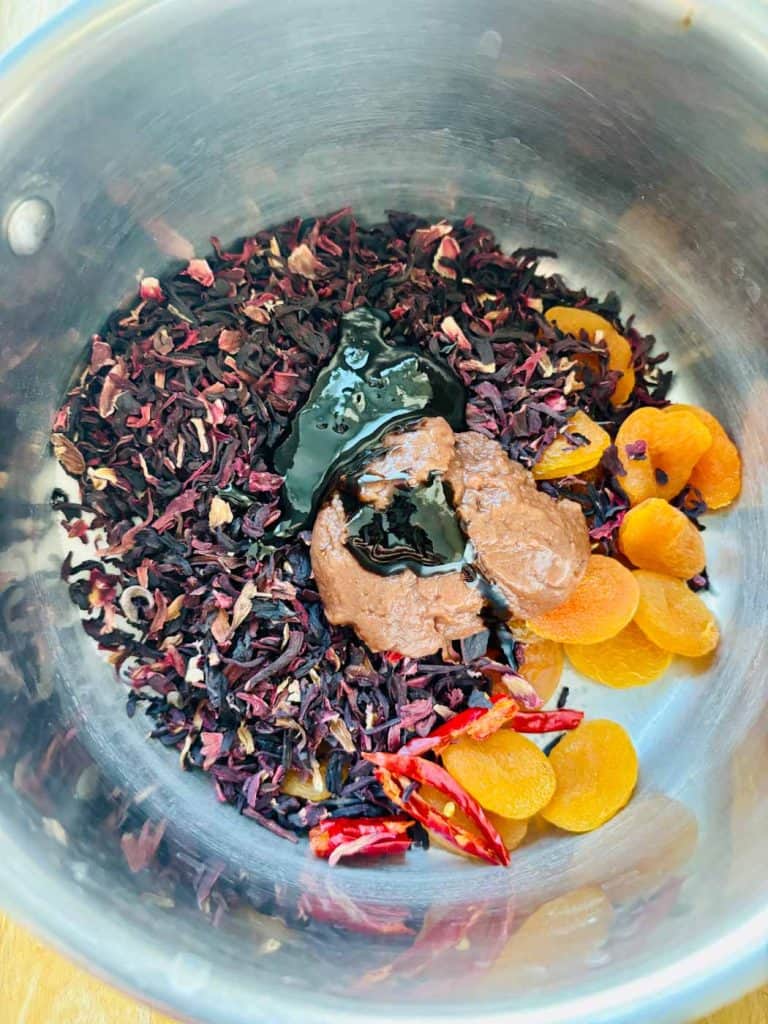
- Dump everything EXCEPT the lime juice into a medium saucepan and stir together. Place over medium-high heat and bring to a boil, then immediately lower to a simmer. Cover and let simmer 15 minutes. Remove from the heat and remove the cover to cool for a few minutes
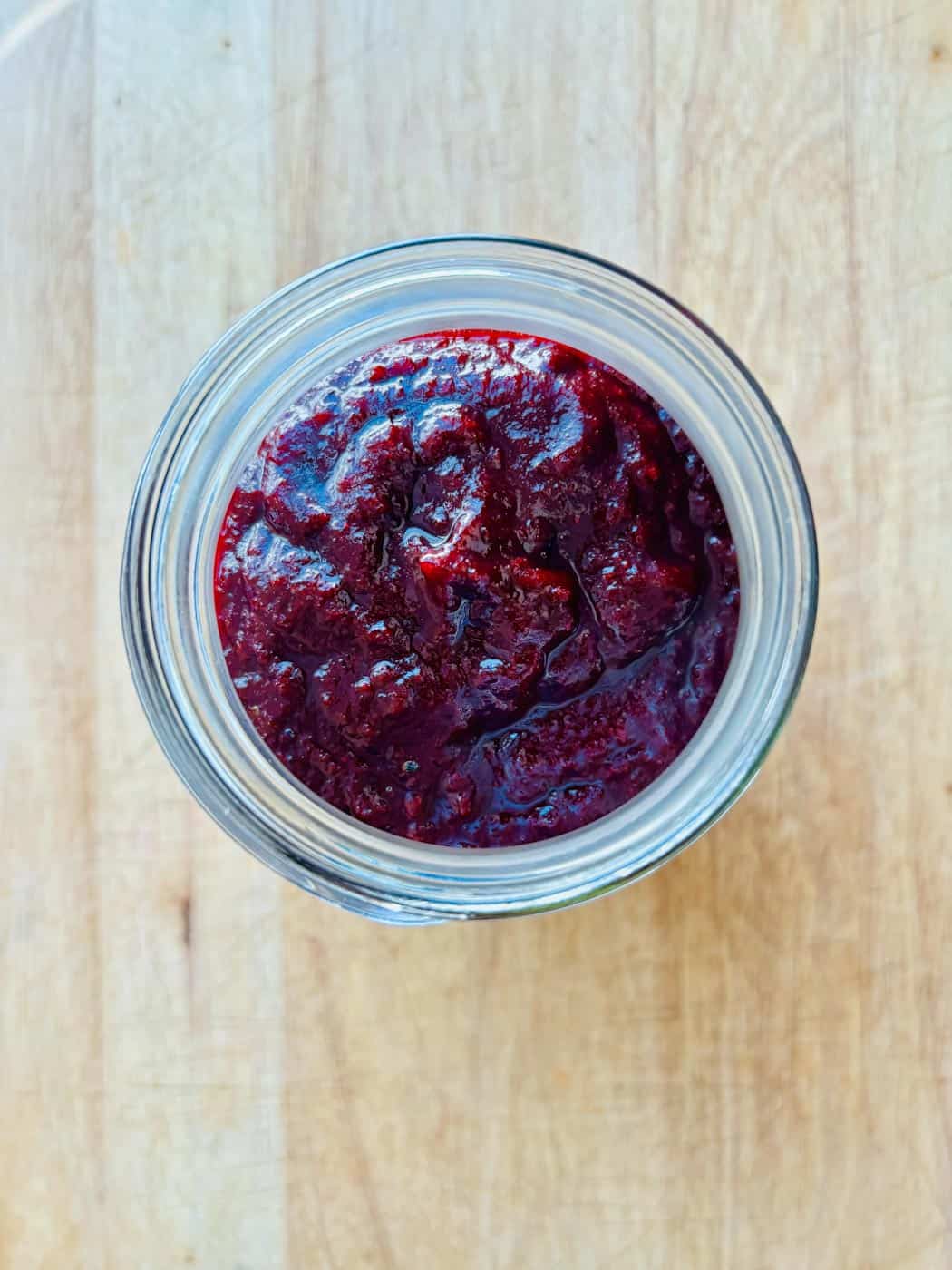
- Tip the lime juice into a blender or food processor. Add the hibiscus mixture including all the solids. Cover and blitz for 30 seconds. Uncover, scrape down the sides with a spatula, cover, and blitz again for 30 seconds to 1 minute. The mixture should be a smooth puree.
- Pour into a mason jar or other airtight container and seal. Store in the fridge for one to two months.

Leave a Reply